

Menopausal Hormone Therapy
Menopausal Hormone Therapy at Healthcare on Collins
Menopausal Hormone Therapy (MHT) refers to giving a woman oestrogen to treat the symptoms of oestrogen deficiency during perimenopause and menopause.
The most effective treatment for the symptoms of lowered oestrogen is oestrogen itself.
The GPs who consult at Healthcare on Collins provide expert care and personalised MHT services to effectively alleviate the symptoms of oestrogen deficiency during perimenopause and menopause, caring for the well-being and comfort of every woman that visits this service.
Benefits of MHT
The primary and most significant benefit of MHT is the relief of menopausal symptoms, which are comprehensively described on Healthcare on Collins’ menopause webpage.
It will treat all of the symptoms that women experience during perimenopause, and in the vast majority of cases, it is safe for women to take oestrogen.
The relief goes hand-in-hand with improved quality of life, and positive secondary effects such as improved bone density and cardiovascular health.
Your caring GPs look forward to discussing with you the advantages and limitations of MHT specific to your health and medical history.

Understanding How MHT Works
To enhance clarity, it is most effective to categorise MHT into two main groups: one for women who have a uterus and another for women who have undergone a hysterectomy and no longer have a uterus.
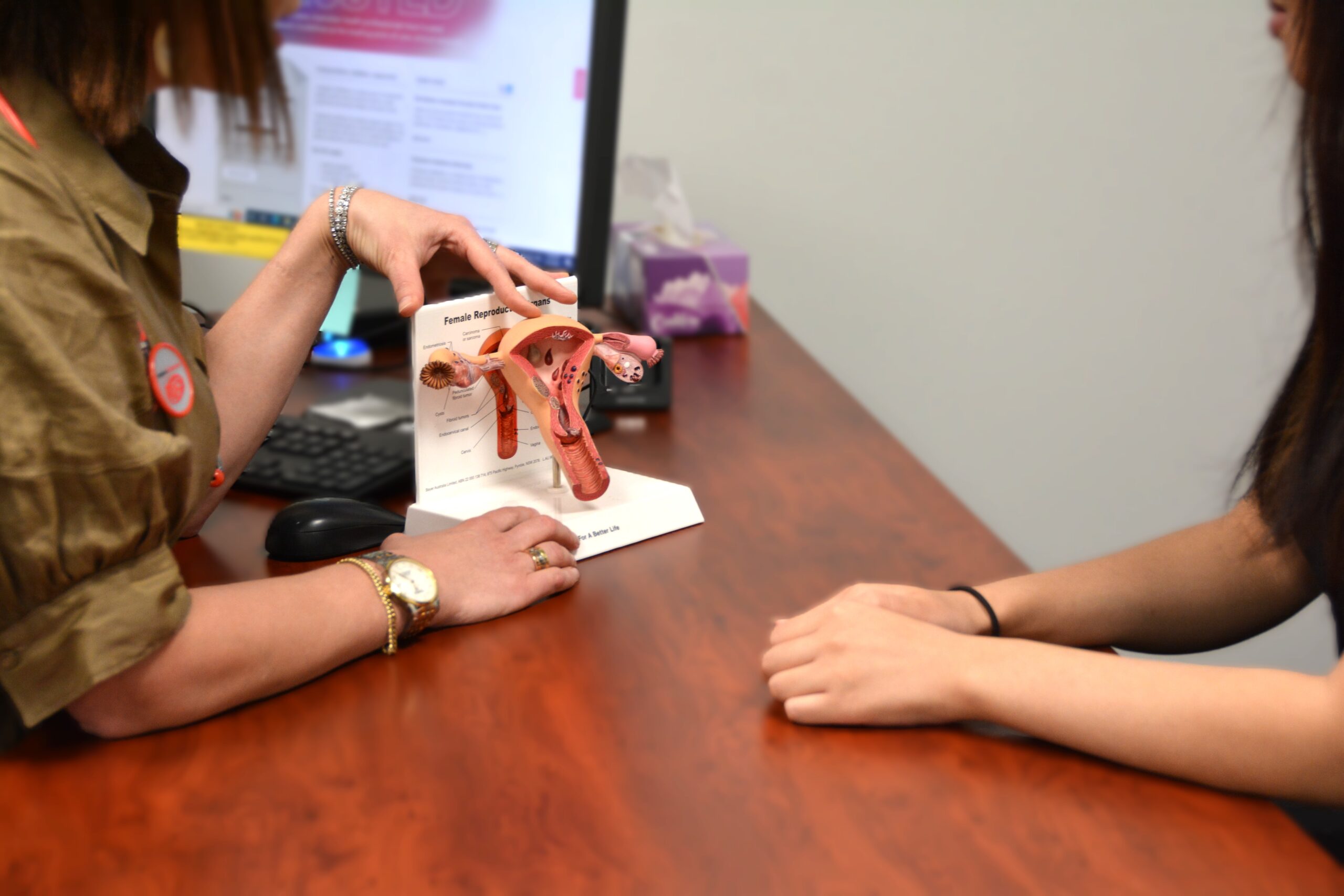
If a woman still has her uterus and is using oestrogen to alleviate menopause symptoms, it is essential for her to concurrently take progesterone.
This is because progesterone safeguards the uterine lining from potential risks associated with estrogen therapy. Without this protection, unopposed oestrogen therapy can increase the risk of developing uterine cancer.
Options for Combined MHT:
- Oral Medications: This is a common choice for many women. They can take a combination of oestrogen and progesterone in the form of oral tablets or pills. The exact regimen is determined by how long it has been since the woman’s last natural period.
- Transdermal Patches and Gels: These options provide a steady release of hormones through the skin and can be more convenient for some individuals.
Progesterone-Containing Intrauterine Device (IUD): Women can also consider using a progesterone-containing IUD as the progesterone component of their therapy, coupled with an appropriate form of oestrogen. An IUD is a long-acting contraceptive device that can offer both contraception and hormone therapy.
Several practitioners who consult at this service insert Mirena IUDs.
Women Without a Uterus (Oestrogen Alone)

In contrast, if a woman has had a hysterectomy and no longer has a uterus, she can take oestrogen alone.
In this case, she can choose between tablets, patches, or gel/cream forms of oestrogen for her treatment.
Options for Oestrogen-Only Therapy:
- Oral Medications: Oestrogen can be taken in tablet form, which is convenient and widely used.
- Transdermal Patches: Transdermal patches that deliver oestrogen directly through the skin can be an effective choice.
- Gel/Cream Forms: Oestrogen is available in gel or cream forms that can be applied topically.
Suitability
Menopausal Hormone Therapy is typically suitable for women who are experiencing symptoms of oestrogen deficiency during perimenopause and menopause.
Some women cannot safely take oestrogen, and that includes those, for example, who have had a hormone-dependent cancer like breast cancer, or women who have had unexplained clotting in the past.
MHT does not serve as contraception for women. If a woman is sexually active and still having natural periods, she should consider contraception, and the combined oral contraceptive pill may be a more suitable choice for her as a form of oestrogen replacement.
For women who no longer have natural periods, the need for contraception becomes unnecessary.

Compassionate Women’s Healthcare at Healthcare on Collins
The GPs at Healthcare on Collins are very experienced in women’s health and understand the intricacies of perimenopause, menopause, and MHT. They provide holistic care including:
- The prescription of appropriate medications
- Achieving quality nutritional and exercise guidelines
- Management of weight, alcohol use, mental health, lifestyle
- Supportive screenings such as cervical screening, mammograms, cardiovascular risk screening, bowel cancer screening & bone density health
When it comes to your well-being during this transitional time, you can rely on the compassionate GPs who consult at Healthcare on Collins.
Schedule an appointment to receive personalised care from the warm and caring team today.
Call Us
(03) 9650 4284
FAQ
How many consultations do I need?
Usually, the assessment and commencement of MHT takes place over 2 consultations.
Your GP would review your progress every 3 months until you are satisfied with your symptom control.
Then your GP will usually recommend reviewing on a 12-monthly basis.
How does a woman discontinue MHT treatment?
It is usually recommended that you consider periodically discontinuing your MHT to assess its ongoing necessity. Your GP may suggest doing this approximately every 2 years.
It is advisable to discontinue MHT during the cooler winter months to evaluate if symptoms like hot flushes persist. If symptoms persist, you may choose to resume MHT, and then revisit the option of discontinuing it again in 2 years.
GPs will guide each patient through this on an individual basis.
Where Healthcare On Collins uses the term woman, we are including women, transgender men, and all people who were born with female reproductive organs.